Things to do in Waco: the mammoths still in the ground
A bone found beside the Bosque River led to Waco Mammoth National Monument. Today, visitors can see fossils where they were buried while researchers reconsider how the animals died.
In 1978, Paul Barron and Eddie Bufkin found a bone eroding out of a ravine near Waco's Bosque River. They had been looking for arrowheads and fossils; they carried their find to Baylor University's Strecker Museum, where staff identified a Columbian mammoth's femur.
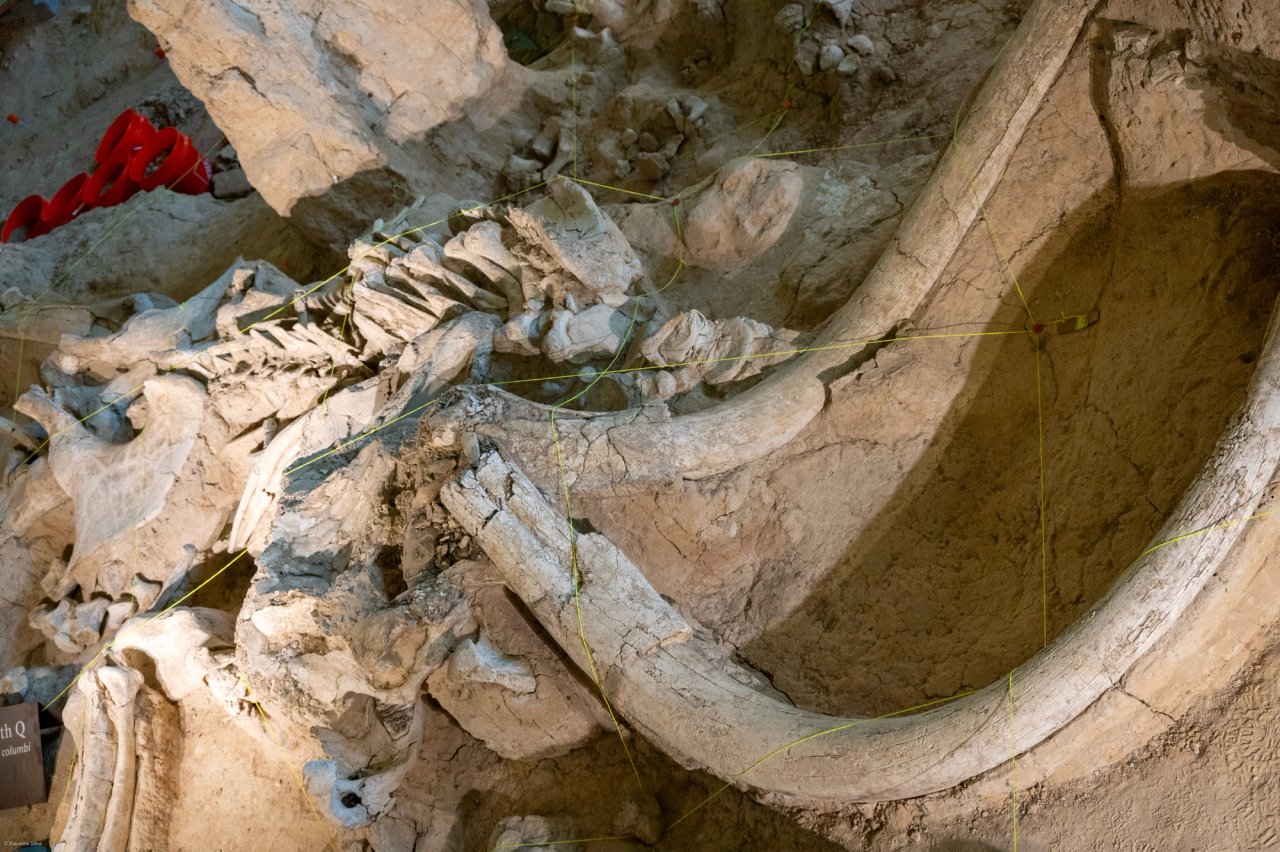
Today, a paved path leads visitors into the Dig Shelter at Waco Mammoth National Monument, where some of the bones remain in the ground. The building encloses part of the excavation, with fossils still in their original positions. Visitors can see them while scientists reconsider how the animals died.
In its June 2026 research update, the National Park Service says recent work has ruled out catastrophic flood deposits in the shelter. The old account of mammoths overwhelmed by water no longer settles the story. We move people between Texas cities, and a place that can change your picture of Texas is a reason to make the trip.
What came out of the ravine
After Barron and Bufkin brought in the bone, Strecker Museum staff assembled a team of volunteers and began excavating with brushes and bamboo scrapers. The finds included adult females and young mammoths, along with other Ice Age animals. Work continued over years, as museum staff, students and volunteers uncovered and preserved the remains.
These were Columbian mammoths, which could stand more than 14 feet tall, with tusks up to 16 feet long. According to the Park Service's account of the animals, they probably had little hair, suited to the warmer Texas climate. The familiar image of a woolly mammoth trudging through snow is a poor guide to what lived here.
The Western camel belonged in that picture too. Adapted to open savannah and Waco's dry climate, it lived alongside mammoths in North America. A camel among the fossils makes the Ice Age feel less like a single frozen scene and more like a world with different habitats, occupied by animals that found what they needed in them.
Above the excavation today are oak, mesquite and cedar trees along the Bosque River. The wooded parkland gives little away about the animals buried beneath it. Barron and Bufkin began with the one bone they could see.
The flood story is being reconsidered
The Park Service's older history page, last updated in 2015, describes a nursery herd trapped by rapidly rising water from the Bosque. It is a vivid explanation, and an easy one to carry into the shelter: a herd, a flood, a burial.
The newer interpretation is less tidy. Researchers have identified three distinct fossil layers in the Dig Shelter, deposited on flood plains where water moved slowly. The bones also record repeated periods of severe stress; the young animals show signs of stress around the time they died. Researchers are investigating possible environmental causes.
Sediment deposited by water does not, by itself, establish that a catastrophic flood killed the animals. The June update rules out catastrophic flood deposits in the shelter without supplying a definitive replacement account of their deaths.
A tour is a chance to ask how researchers read those layers and what they still hope to learn. The nursery herd, adult females with their offspring, is there in the evidence. Exactly what happened to the animals remains under investigation.
The collection stayed in Waco
Some of the mammoths did go to a museum. Baylor University's Mayborn Museum is the monument's official repository, responsible for storing objects removed from the park and making them available for research, together with their documentation.
That arrangement keeps two parts of the discovery close to each other. At the monument, researchers can study fossils in the bone bed. At Baylor, they can work with material already removed and the records that accompany it. The monument's foundation document singles out the fact that the specimens and archival records have remained in Waco rather than being dispersed among institutions.
The records include photographs, field notes and maps of the excavation, as well as cross-sections of the sediment layers. They preserve information about where specimens lay before anyone lifted them out. In the shelter, that relationship is still visible: a bone has a position in the ground, with other bones and layers around it.
Inside the Dig Shelter
The shelter opened on December 5th, 2009, after a fundraising effort by the local partners. In her account of the monument, park ranger Rachel Nelson describes the decision to protect the site so people could see the fossils where they had been discovered. The enclosure allows public visits and protects the remains for further study.
Visits begin at the Welcome Center on Steinbeck Bend Drive. According to the park's visitor information, tours leave every 30 minutes and last 45 minutes to an hour; an ordinary visit does not require a reservation. A tour fee applies. The walk to the shelter is 300 yards along a paved path.
The trail is accessible, and wheelchairs are available to use without charge. Food and drinks stay outside the shelter. Check the park's current notices before setting your day's schedule, then leave enough time for the walk and the guide's explanation rather than treating the monument as a quick stop for a photograph.
From the shelter's elevated walkway, you look down into the bone bed. The fossils lie below you, still held in the sediment.
Getting to Waco from Dallas or Austin
Our Dallas to Waco page lists about one hour and 45 minutes by car; our Austin to Waco page lists about one hour and 25 minutes. Allow separately for the connection to the monument, whose entrance is at 6220 Steinbeck Bend Drive.
Hitch is rideshare for longer distances. You choose a departure between cities, and we match your trip with a driver. Private rides let you book the whole car; check the schedule for the ride types available on your travel date.
Sources
- National Park Service: History & Culture, discovery and excavation history; July 9th, 2015.
- National Park Service: Plan Your Visit, September 24th, 2026.
- National Park Service: Mammoth Herd, current research interpretation; June 8th, 2026.
- National Park Service: Ice Age Animals, May 6th, 2021.
- Baylor University, Mayborn Museum: Waco Mammoth National Park Repository.
- National Park Service: Waco Mammoth Foundation Document, September 2016.
- National Park Service, Rachel Nelson: National Park Getaway, February 25th, 2026.
- National Park Service: Operating Hours & Seasons, June 12th, 2026.
- National Park Service: Directions, July 8th, 2019.
- Hitch: Dallas to Waco.
- Hitch: Austin to Waco.
- Waco Mammoth National Monument photograph. Photo: © Xiquinho Silva (xiquinhosilva). CC BY 4.0. Uncropped; resized for display.